DF64 Gen 2 64mm Flat Burr Dial-In Guide: Zero-Point Calibration, DLC Burrs & Filter Ranges
Calibrate true zero chirp on the DF64 Gen 2 and DF54, check dry-erase marker burr alignment, and dial in 64mm DLC or SSP flat burrs from espresso to V60.
Reader-Supported Lab Note: When you buy gear or whole beans via links in this guide, we may earn an affiliate commission at zero extra cost to you. As an Amazon Associate I earn from qualifying purchases. Learn more.
⚡ 60-Second Barista Takeaways
- Because the DF64 Gen 2 collar is stepless, every dial chart is meaningless until you align the movable metal pointer to True Burr Touch (unplugged) first.
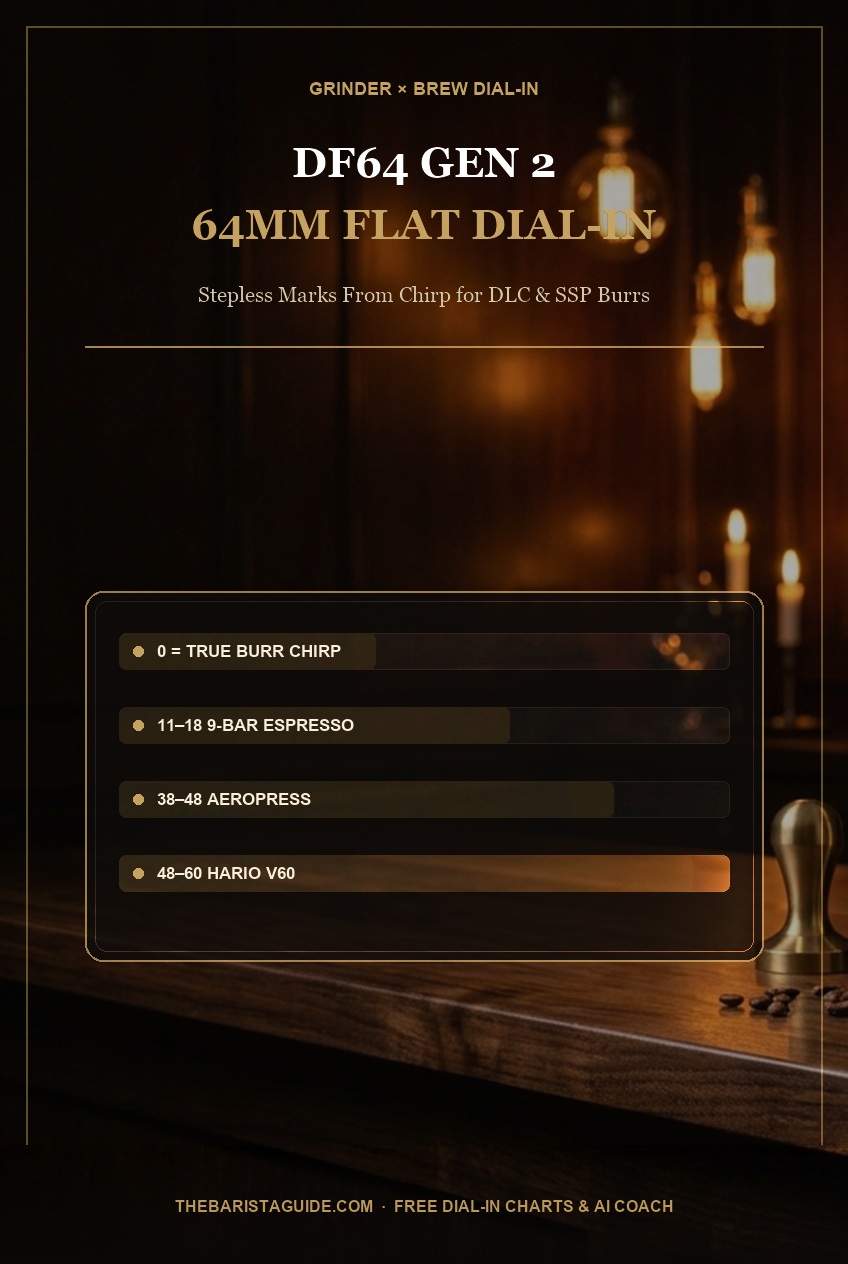
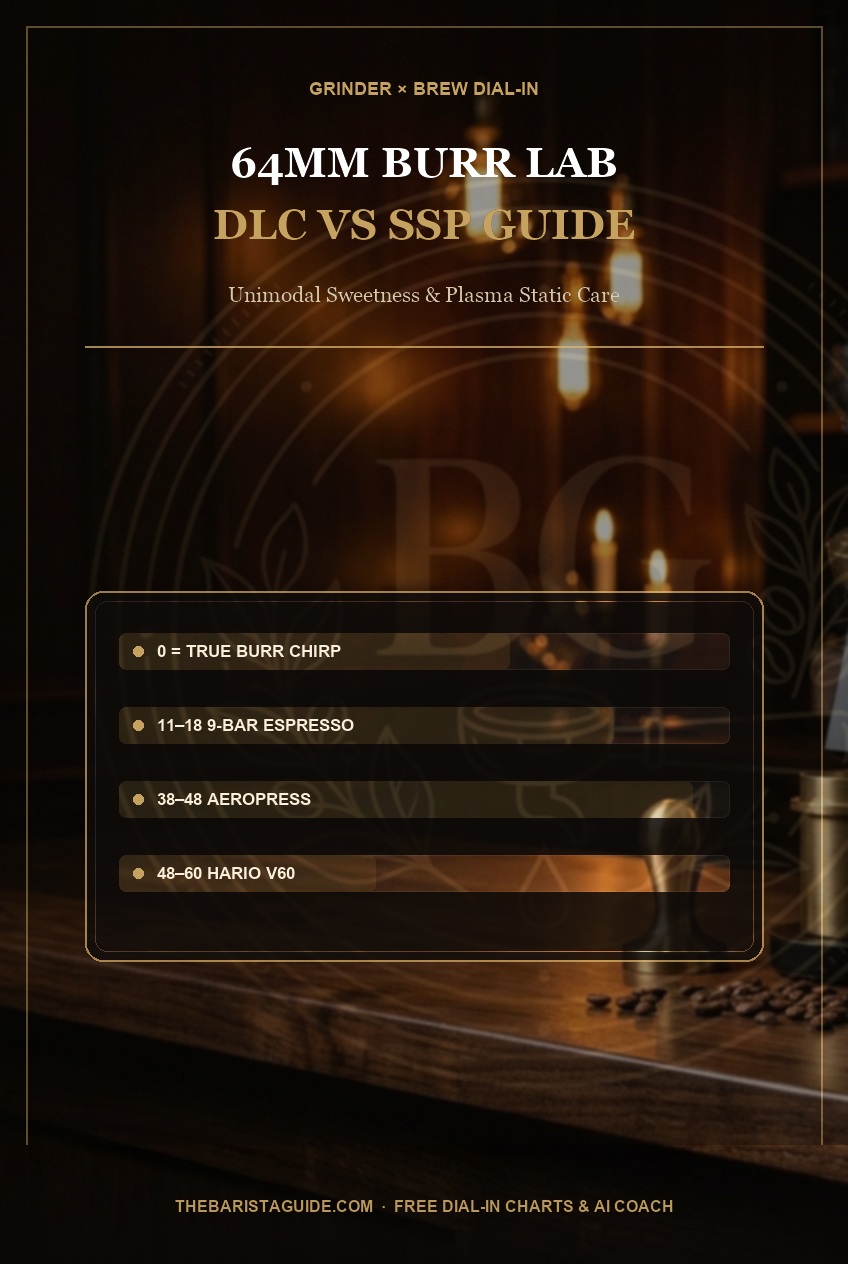
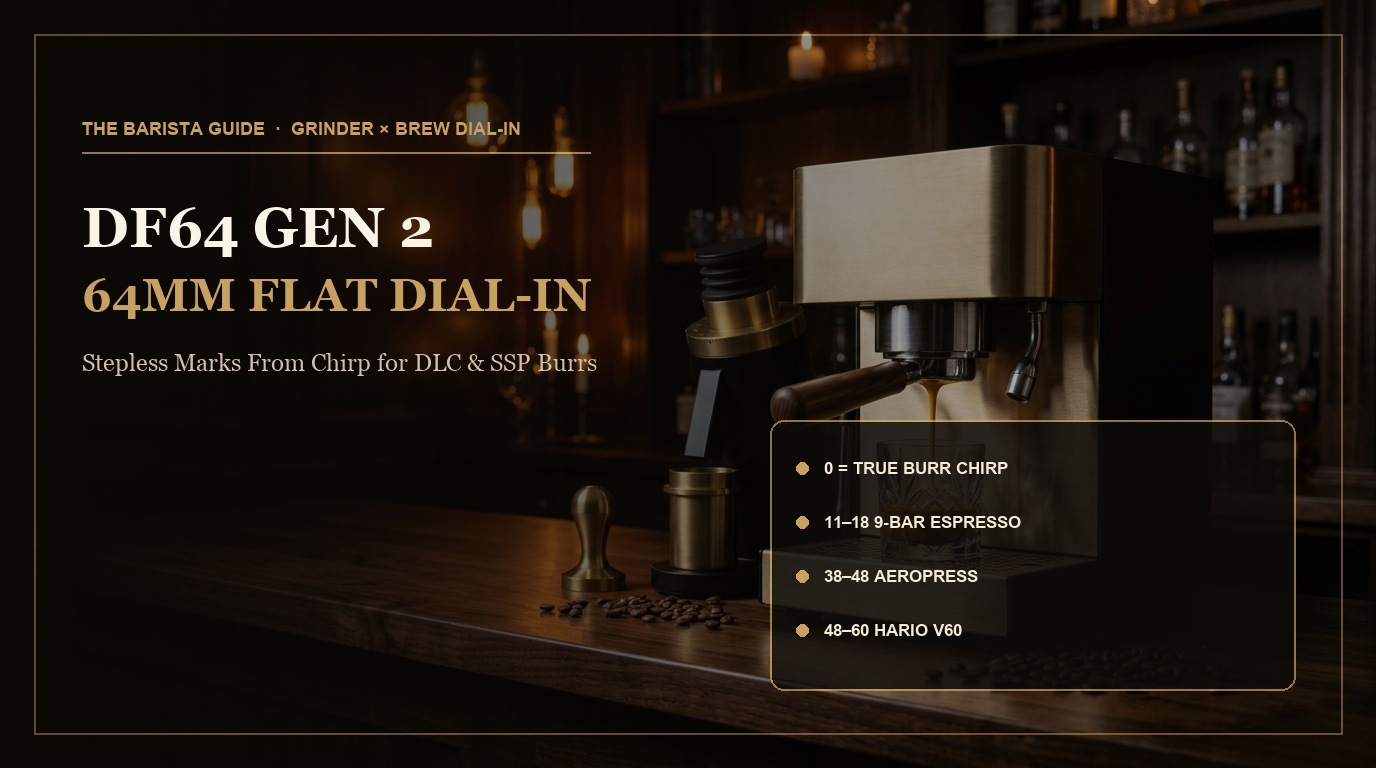
- Each numbered tick on the 0–90 collar shifts vertical burr clearance by roughly 12 microns—place espresso between 11 and 18 and V60 between 48 and 60.
- Clean the plasma ionizer needles inside the exit chute with a dry nylon brush every 2 weeks so static chaff never bridges across the electrodes.
Why the 64mm Flat-Burr Platform Changed Home Espresso Forever
Before the DF64 Gen 2 Single-Dose 64mm Flat Burr Grinder arrived, stepping into commercial-size 64mm flat burrs with sub-0.1g single-dose retention required spending $1,500+ on boutique CNC grinders. By combining a heavy cast-aluminum body, a built-in plasma static ionizer, an anti-popcorning collar, and universal 64mm three-hole burr compatibility under $400, the DF64 Gen 2 (and its compact sibling, the DF54 Single-Dose Flat Burr Grinder) became the enthusiast gold standard.
Flat burrs slice beans horizontally via centrifugal force rather than crushing them down a gravity cone. The result is a tighter unimodal particle peak: fewer muddying boulders, fewer bitter fines, and unmistakable flavor separation where blueberry, bergamot, and caramel taste like distinct notes rather than a blended chord.
Master DF64 Gen 2 & SSP 64mm Settings Chart (Zeroed at Burr Touch)
Once your metal pointer is calibrated to unplugged burr touch (0), use these stepless benchmarks:
| Brew Method | Stock 64mm DLC Burrs | SSP High-Uniformity (HU) | SSP Multipurpose (MP) | DF54 (54mm Stock) | Recommended Prep Gear |
|---|---|---|---|---|---|
| Light Turbo Shot (6-Bar) | 15 – 19 | 13 – 17 | 11 – 15 | 17 – 21 | IMS Nanotech 20g Basket |
| 9-Bar Espresso (Light/Med) | 11 – 15 | 10 – 14 | 7 – 11 | 13 – 17 | 58mm Blind Shaker Cup |
| 9-Bar Espresso (Med-Dark) | 15 – 19 | 14 – 18 | 11 – 14 | 17 – 22 | Normcore V4 58.5mm Tamper |
| Moka Pot | 26 – 34 | 24 – 32 | 22 – 30 | 28 – 36 | Bialetti Moka Express |
| AeroPress | 38 – 48 | 36 – 46 | 35 – 45 | 40 – 50 | AeroPress Flow Control Cap |
| Hario V60 / Origami | 48 – 60 | 50 – 62 | 48 – 64 | 52 – 65 | Cafec Abaca V60 Paper Filters |
| French Press / Cold Brew | 70 – 88 | 72 – 88 | 72 – 88 | 74 – 90 | Timemore Black Mirror Scale |
Hot-Starting & Plasma Chute Care (Avoid the #1 Chute Clog)
Two habits keep a DF64 Gen 2 running with 0.0g to 0.1g retention for years:
- Always Hot-Start & Skip Heavy RDT Sprays: Turn the side power button ON before dumping beans into the bellows cup, and wait until grinding finishes before giving two firm bellows pumps. Because the Gen 2 uses high-voltage plasma needles inside the chute, heavy RDT water spritzing turns coffee dust into wet paste over the ionizer tips!
- Dry-Brush the Chute Weekly: Run the included long chute brush up the spout once a week. If static suddenly returns in dry winter air, wiping the two tiny metal plasma prongs inside the upper chute mouth restores zero-static flow in 10 seconds.
Barista-Tested Gear & Roast Provisions
- Primary 64mm Flat Grinder: DF64 Gen 2 Single-Dose 64mm DLC Flat Burr Grinder — Unbeatable stepless 64mm flat-burr clarity with plasma anti-static ionizer.
- Compact Budget Sibling: DF54 Single-Dose 54mm Flat Burr Grinder — Delivers 90% of DF64 espresso magic in an ultra-quiet $229 footprint.
- Unimodal Burr Upgrade: SSP 64mm Red Speed High-Uniformity / Multipurpose Burrs — Drop-in Korean Red Speed titanium-aluminum-nitride burrs rated for 10,000 lbs.
- Grounds Homogenizer: 58mm Aluminum Blind Shaker Dosing Cup — Fits directly on DF64 forks to densify flat-burr grounds evenly into 58mm baskets.
- Fast-Flow V60 Papers: Cafec Abaca Cone Paper Filters (Size 02 · 100-Pack) — Manila hemp crepe texture prevents flat-burr V60 beds from stalling on Ethiopian coffees.
- Chute Brush Set: Natural Boar Bristle Espresso Grinder & Chute Cleaning Brush — Keeps plasma ionizer pins dry and static-free.
Instant Coffee Grinder Setting & Dial-In Lookup
Frequently Asked Calibration Questions
How do I find True Zero on my DF64 Gen 2 safely without damaging the burrs?
Unplug the grinder first! Remove the bellows, spin the lower burr carrier clockwise by hand with one finger while slowly turning the outer collar toward 0 until you feel the first gentle metallic kiss. Loosen the screw on the movable zero-ring pointer, align it to that exact point, and never run the motor at 0.
Do I need to do the dry-erase Expo marker alignment test on a DF64 Gen 2?
Factory Gen 2 machining is dramatically flatter than Gen 1, typically achieving 80%–90% wipe out of the box. If a marker test shows less than 75% wipe on either carrier, tucking one 4x10mm strip of heavy-duty aluminum foil (~16 microns) under the low screw pad brings alignment to 95%+.
Should I upgrade stock DLC burrs to SSP High-Uniformity or SSP Multipurpose?
Season the stock Gen 2 Diamond-Like Carbon (DLC) burrs with 3–4 kg of coffee first—they already balance chocolate body and fruit remarkably well. Upgrade to SSP Multipurpose (MP) only if you drink ultra-light Nordic V60 and 6-bar turbo shots; choose SSP Cast Lab Sweet V3 for syrupy all-round sweetness.
Quick-Reference Espresso & Brew Cheat Cards