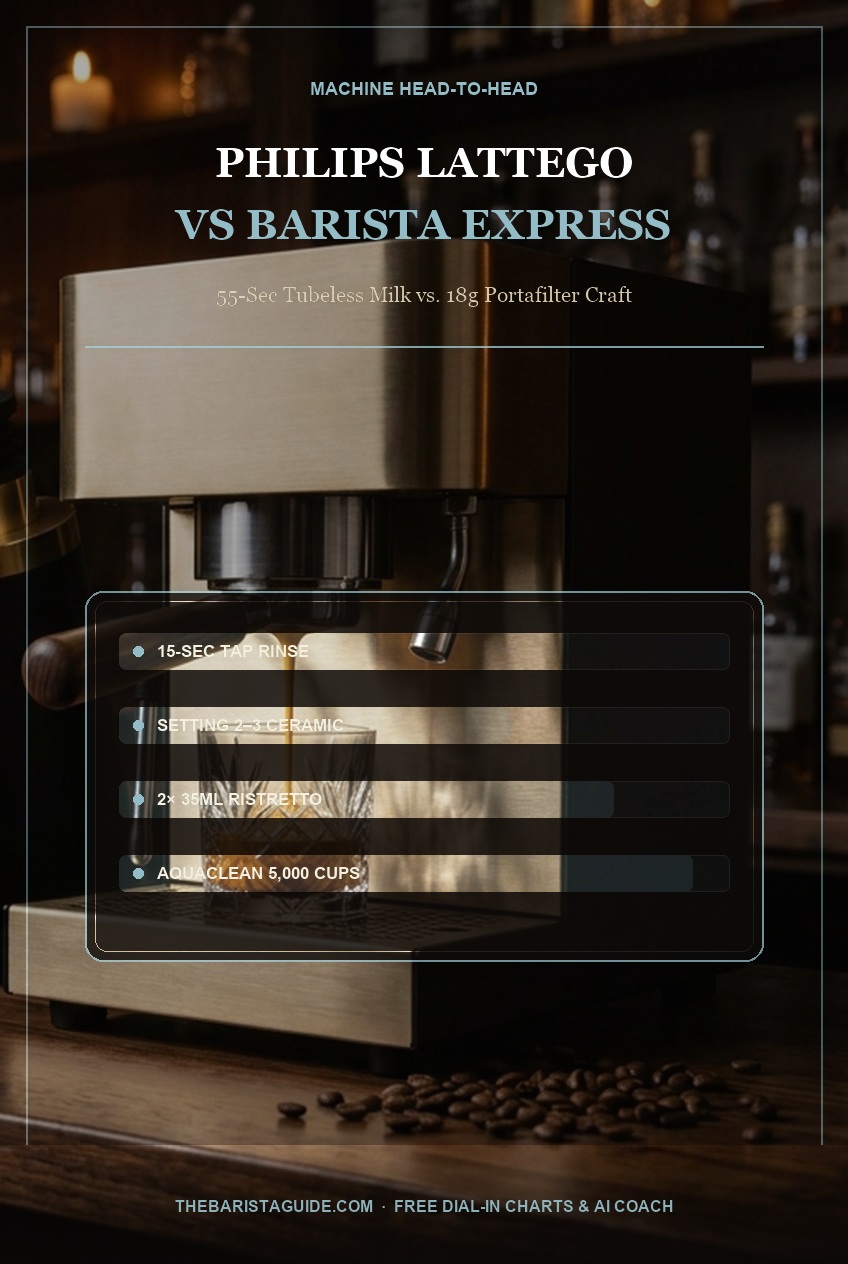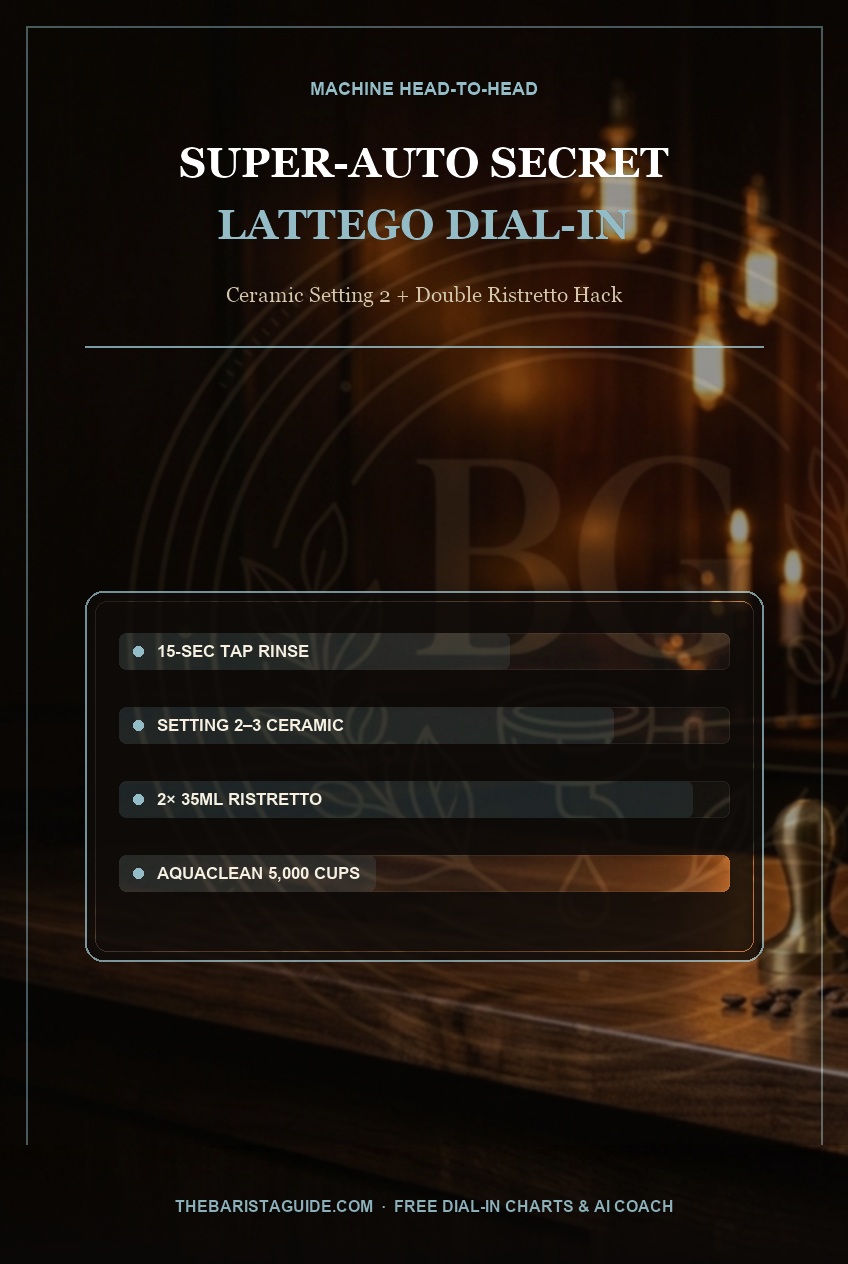
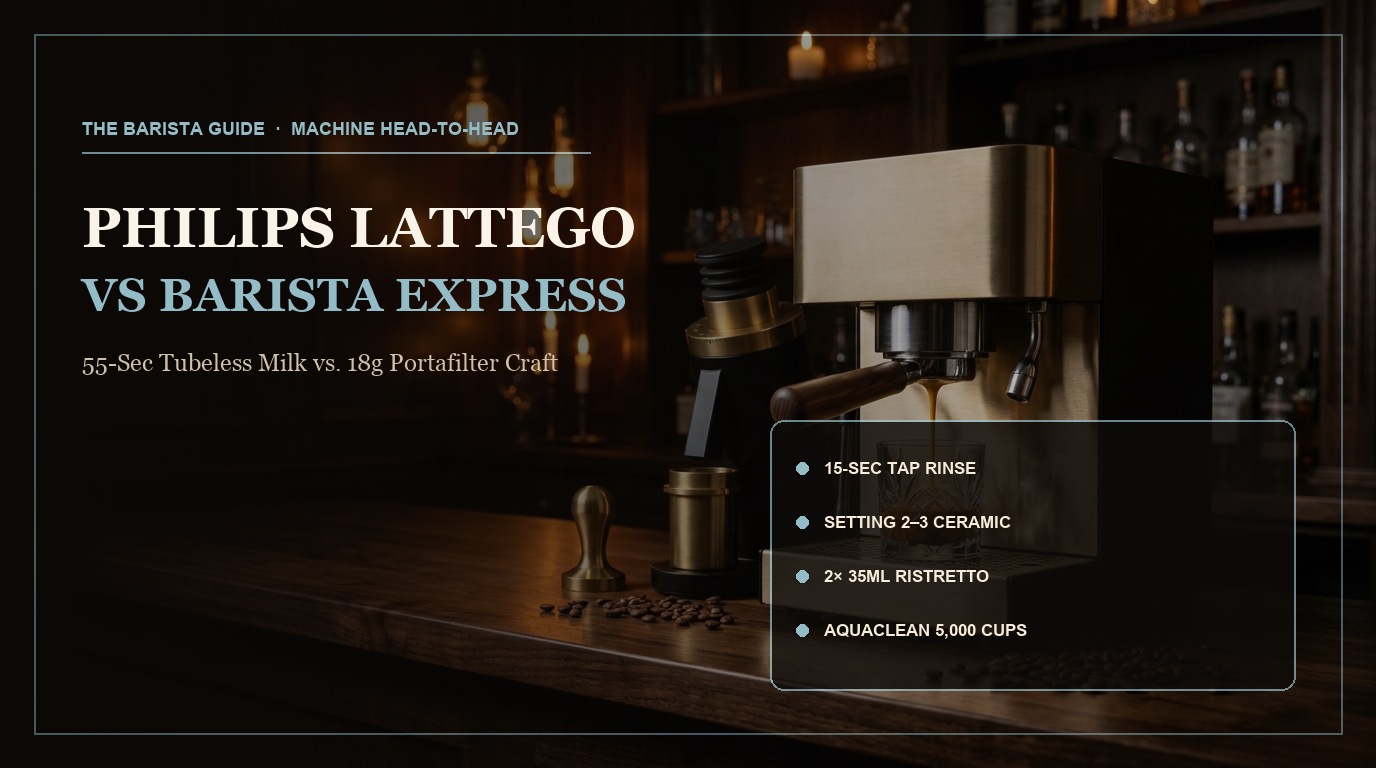
Philips LatteGo vs. Breville Barista Express: Super-Automatic Convenience vs. Semi-Auto Craft
Should you buy a one-touch Philips 3200/4300 LatteGo super-automatic or a hands-on Breville Barista Express? We test crema thickness, milk cleanup, and dial-in.
Reader-Supported Lab Note: When you buy gear or whole beans via links in this guide, we may earn an affiliate commission at zero extra cost to you. As an Amazon Associate I earn from qualifying purchases. Learn more.
⚡ 60-Second Barista Takeaways
- Philips LatteGo internal brew groups dose ~10g–11g max per cycle vs. 18g–19g in a Breville 54mm portafilter—pull a double Ristretto on LatteGo for café-strength lattes.
- Philips’s patented 2-piece tubeless LatteGo milk carafe rinses clean under warm tap water in 15 seconds with zero silicone hoses to sour.
- Philips Adapting System takes 50–80 shots to self-calibrate puck compression—only adjust the 12-step ceramic grinder 1 click while actively grinding.
The Honest Question Every Busy Coffee Household Faces
Be completely honest with yourself about Tuesday morning at 7:10 AM when you're running late: do you genuinely want to weigh 18.0g of beans, fluff grounds with needles, tamp at 25 lbs, time a 29-second pull, steam milk in a steel pitcher, knock out a spent puck, and wipe a wand? Or do you want to press one illuminated icon while toasting a bagel and pick up a piping-hot cappuccino 55 seconds later?
That single lifestyle question separates the Philips 4300 Series Fully Automatic Espresso Machine with LatteGo (and value-priced Philips 3200 Series LatteGo) from the hands-on Breville Barista Express Espresso Machine.
Real-World Cup Quality, Cleanup & Maintenance Showdown
| Comparison Factor | Philips 3200 / 4300 LatteGo | Breville Barista Express / Pro | Philips Baristina Compact Hybrid |
|---|---|---|---|
| Max Coffee Dose | ~10.5g–11.5g internal chamber | 18.0g–20.0g 54mm Steel Basket | ~11g Automated Swipe Portafilter |
| Straight Espresso Body | Smooth Lungo / Crema-Rich Café | Thick, Syrupy Specialty 1:2 Espresso | Clean 16-Bar Crema |
| Milk Foam Texture | Airy Cappuccino Cloud (Zero Latte Art) | Velvety Wet-Paint Microfoam | Separate Frother Optional |
| Daily Milk Cleanup | 15-Second Tap Rinse (Zero Hoses!) | Purge & Wet-Cloth Wipe Every Steam | Portafilter Knock-Out Only |
| Water Filtration | Philips AquaClean Filter (5,000 cups) | Charcoal Resin Tank Filter (90 days) | Tank Filter Optional |
| Time Per Latte | 55 seconds (Zero skill needed) | 3.5 minutes (Hands-on craft) | 60 seconds |
Why Philips LatteGo Solves the #1 Super-Automatic Headache
Most bean-to-cup machines route warm milk through narrow internal rubber tubes and plastic manifolds that sour and breed bacteria if you forget a chemical flush. Philips eliminated every single hose: the LatteGo carafe snaps two dishwasher-safe Tritan pieces together to create a high-velocity Venturi mixing chamber right over your mug, then unclips onto your refrigerator door between drinks.
How to Make a Philips LatteGo Taste Like a Real Café Latte
Because internal super-automatic chambers hold roughly half the coffee mass of a commercial 18g double portafilter, pushing the factory 120ml "Coffee" button over-extracts 10g of grounds into thin bitterness. Use our Double-Ristretto Barista Recipe instead:
- Dial Ceramic Burrs Down to
2or3: Push down the black knob inside the bean hopper and click 1 step finer ONLY while the grinder is actively spinning, running 4 shots between clicks. - Pull Two Short 35ml Shots (
4300 Ristretto): Max out Aroma Strength (5/5 on 4300, 3/3 on 3200) and program espresso volume to 35ml–40ml. Pulling two consecutive 35ml ristrettos over steamed milk delivers 21g of freshly ground coffee—matching third-wave café strength! - Keep AquaClean Fresh: Swap your Philips AquaClean Descaling Water Filter every 3 months and drop in one Philips Coffee Oil Remover Tablet monthly to keep crema thick and golden.
Barista-Tested Gear & Roast Provisions
- Best Mid-Tier Super-Auto: Philips 4300 Series Fully Automatic Espresso Machine with LatteGo — Adds TFT screen user profiles, Ristretto & Café au Lait modes, and 5-level aroma strength over the 3200.
- Best Sub-$700 One-Touch Value: Philips 3200 Series LatteGo Fully Automatic Machine — Core 5 one-touch drinks with the identical 15-second tubeless LatteGo frother.
- Hands-On Semi-Auto Winner: Breville Barista Express 54mm Espresso Machine — Choose Breville if syrupy 18g straight espresso and pouring rosetta latte art are your goal.
- 5,000-Cup Scale Shield: Genuine Philips AquaClean Water Filter Cartridge (2-Pack) — Ion-exchange micro-porous filter prevents limescale buildup inside thermoblocks.
- Super-Auto Safe Beans: illy Classico Medium Roast Whole Bean Coffee (Dry Non-Oily) — Zero sticky surface oil glaze so ceramic burrs never clog.
- Brew Group Tune-Up Kit: Philips Brew Group Silicone Lubricant & Oil Remover Kit — Keeps internal piston O-rings gliding smoothly past 3,000 shots.
Instant Coffee Grinder Setting & Dial-In Lookup
Frequently Asked Calibration Questions
Why do the first 10 shots out of a brand-new Philips 3200 or 4300 LatteGo look watery?
Every Philips / Saeco removable brew group uses an electronic motor-current sensor ("Adapting System") that starts cautiously and gradually increases dose duration over your first 40–60 pulls. Set Aroma Strength to max (3/3 or 5/5), Water Volume to shortest (35–40ml), and step the ceramic grinder down to Setting 2 or 3 while running.
Can I use oily dark French Roast beans in a Philips LatteGo super-automatic?
Avoid shiny, oil-slicked French or Italian roasts in ANY super-automatic! Heavy surface oils coat the ceramic burrs and internal chute sensors, preventing beans from feeding cleanly. Choose dry-surface medium or medium-dark specialty espresso blends instead.
How hard is maintenance on the Philips removable brew group?
Pop open the side service door once a week, pinch the yellow PUSH tab to slide out the entire mechanical brew group, rinse it under warm tap water (never dish soap!), air-dry, and apply food-grade silicone grease to the rails every 500 cups.
Quick-Reference Espresso & Brew Cheat Cards