Coffee Degassing & Vacuum Storage Science: Why CO2 Ruins Day-1 Espresso (& When Roasts Peak)
Brewing beans roasted yesterday? Excess CO2 causes giant sour bubbles! Learn exact post-roast rest windows, active vacuum canisters vs. fridge myths, and single-dose freezer tubes.
Reader-Supported Lab Note: When you buy gear or whole beans via links in this guide, we may earn an affiliate commission at zero extra cost to you. As an Amazon Associate I earn from qualifying purchases. Learn more.
⚡ 60-Second Barista Takeaways
- Roasting generates up to 10 liters of trapped CO2 gas per kilogram of coffee—pulling 9-bar espresso before Day 7 creates foamy carbonic sourness and erratic channeling!
- Never store opened coffee bags in the **refrigerator** (condensation + food odors destroy beans), ONLY deep-freeze airtight pre-weighed single doses at 0°F (-18°C) and grind straight from frozen!
- Active vacuum canisters (Fellow Atmos) and displacement plungers (Airscape) double peak counter shelf life compared to rolling down standard kraft bags.
The "Too Fresh" Paradox: Why Day-2 Espresso Tastes Metallic & Sour
New specialty enthusiasts assume coffee works like baked bread—surely beans roasted 24 hours ago must pull the greatest espresso imaginable! Instead, you pull an 18g shot of yesterday's roast and get a 3-inch volcano of fizzy, vanishing bubble-bath crema over a thin, carbonic-tasting liquid that channels wildly.
During Maillard and pyrolysis reactions inside the roaster, green seeds generate nearly 1%–2% of their dry weight in pressurized carbon dioxide (CO2). Under 9 bars of espresso pressure, trapped CO2 supersaturates brew water into bitter carbonic acid (H2CO3) and explodes back into gas bubbles inside the puck—physically shoving water away from coffee solids!
Peak Flavor Rest Windows (Post-Roast Calendar Days)
Let your sealed one-way-valve roaster bag rest unopened in a cool dark cupboard until it enters its optimal degassing window:
| Roast Profile | Cellular Porosity | Filter / Pour-Over Peak Window | 9-Bar Espresso Peak Window | Ideal Storage System |
|---|---|---|---|---|
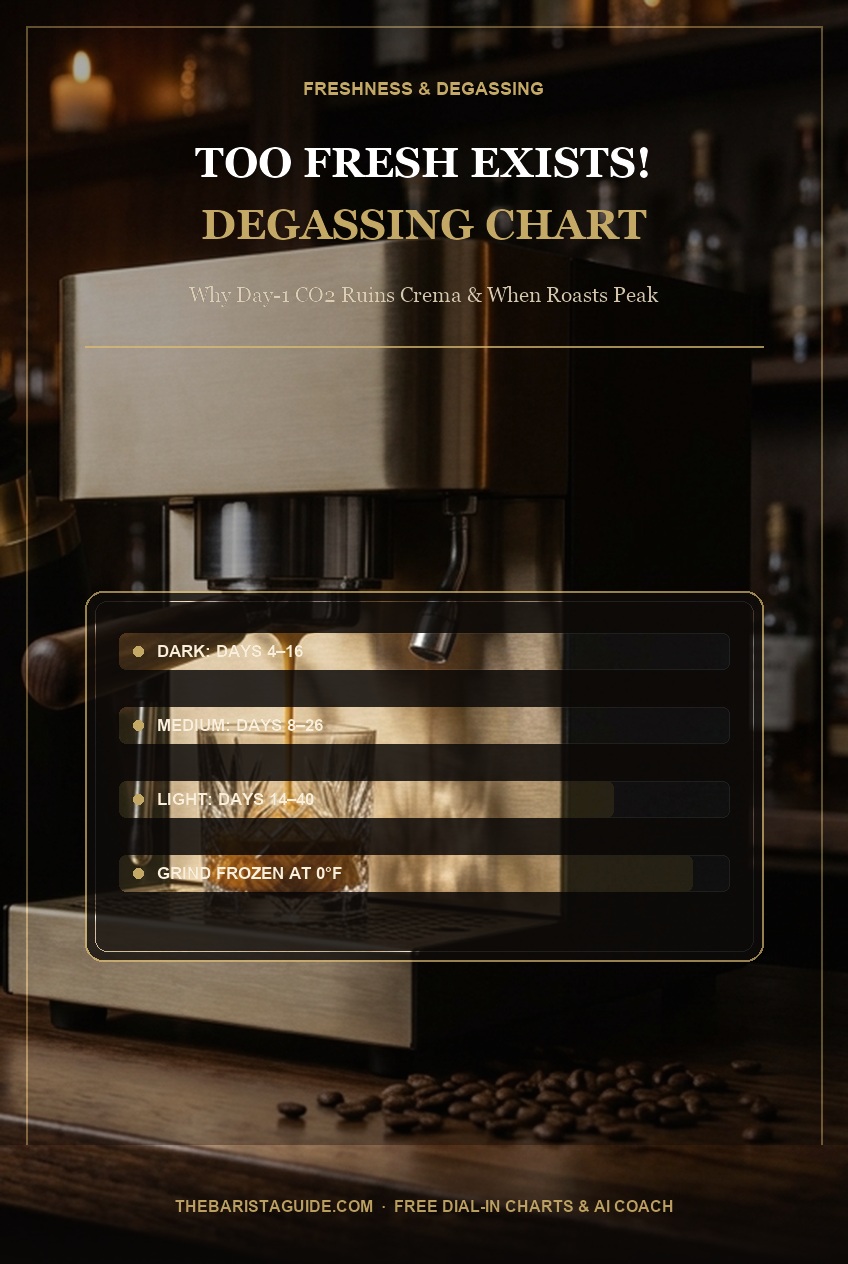
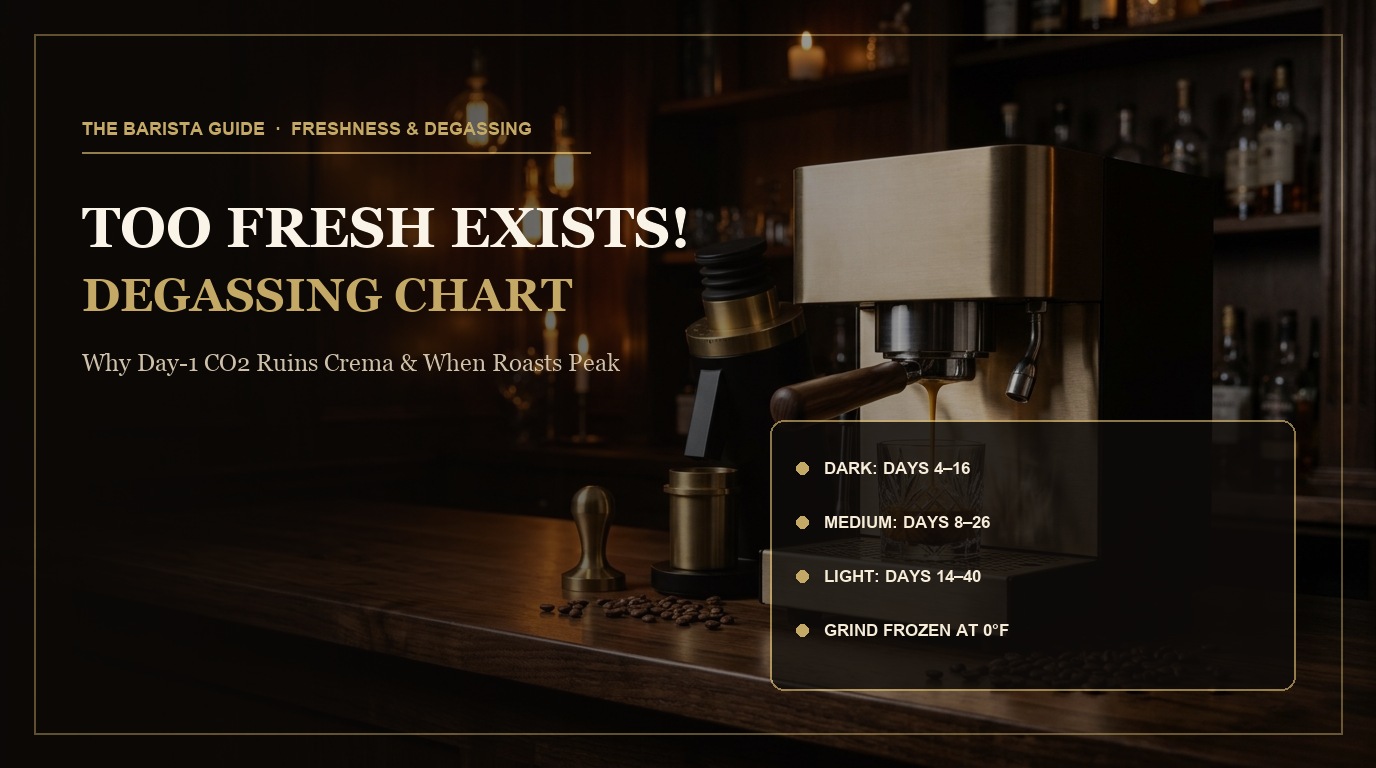
| Dark / Italian Espresso | High (Fast gas escape) | Days 2 – 12 off roast | Days 4 – 16 off roast | Airscape Stainless Plunger Canister |
| Medium Specialty Roast | Moderate | Days 4 – 21 off roast | Days 8 – 26 off roast | Fellow Atmos Vacuum Canister 1.2L |
| Light / High-Elevation Washed | Dense & Tight (Slow escape) | Days 7 – 30 off roast | Days 14 – 40 off roast | Single-Dose Glass Bean Cellar Tubes |
| Decaf (EA / Swiss Water) | Hyper-Porous (Rapid staling) | Days 2 – 10 (Freeze half!) | Days 3 – 12 (Freeze doses!) | 50ml Centrifuge Freezer Tubes |
Active Vacuum vs. Plunger Displacement vs. Single-Dose Cellars
Four enemies oxidize coffee lipids once you tear open a roaster bag: Oxygen (O2), UV Light, Heat (>72°F), and Moisture.
- Countertop Daily Drinkers (2–4 Week Horizon): Transfer a 12 oz bag into an opaque matte-black Fellow Atmos Vacuum-Sealed Canister (twisting evacuates 50%+ oxygen out of headspace) or a Planetary Design Airscape Canister (sliding inner gasket plunger physically sits flush on top of the beans, leaving zero air headspace regardless of how empty the jar gets).
- 6 AM Zero-Weighing Workflow: Pre-weigh twelve 18.0g shots on Sunday afternoon into a walnut Single-Dose Glass Bean Cellar with One-Way Exhaust Valves so you never open your main canister 12 times a week.
- 6-Month Vault Archiving (Rare Geishas & Decaf): On Day 12 post-roast (peak maturity!), portion 18.0g doses into airtight 50ml Flat-Bottom Polypropylene Freezer Tubes or vacuum-sealer bags, tape over any bag valve, store at
0°F (-18°C), and grind straight from frozen months later with Day-12 freshness intact!
Barista-Tested Gear & Roast Provisions
- Vacuum Benchmark: Fellow Atmos Matte Black 1.2L Vacuum Coffee Canister — Integrated twist-pump lid evacuates oxygen with zero batteries or countertop pumps.
- Zero-Headspace Plunger: Planetary Design Airscape Classic Medium Stainless Canister — Patented inner plunger presses air out right down to the bean surface.
- Countertop Speed Vault: 12-Tube Walnut Single-Dose Coffee Bean Cellar + Funnel — One-way CO2 degassing caps keep pre-weighed 18g morning doses ready to dump & grind.
- Deep-Freeze Vault Kit: 50ml Flat-Bottom Airtight Freezer Tubes with Stand (20-Pack) — Each 50ml tube holds 18g–20g of whole beans cleanly in any freezer door.
- Dated Fresh Roasts: Fresh Roasted Coffee Whole Bean Variety Sampler Pack — Nitrogen-flushed one-way valve bags great for testing degassing curves across origins.
- Ceramic Dosing Tray: Porcelain Coffee Bean Weighing & RDT Dosing Cup Tray — Tapered pour lip funnels pre-weighed doses straight into cellar tubes without spilling a bean.
Instant Coffee Grinder Setting & Dial-In Lookup
Frequently Asked Calibration Questions
Why does "Best By" date on supermarket coffee bags lie compared to "Roasted On" date?
Commercial brands stamp a "Best By" date 9 to 12 months in the future—meaning a bag expiring in August was roasted last fall and lost 80% of its volatile aromatics months ago! Always buy bags stamped with an explicit "Roasted On" calendar date.
Should I thaw frozen single-dose coffee beans before grinding them?
NO! Opening a frozen tube at room temperature immediately draws humid kitchen condensation onto cold bean surfaces. Dump frozen beans directly from the freezer into your spinning grinder—sub-zero beans shatter MORE uniformly with narrower particle distribution than room-temperature beans!
Why does the green dot pop back up on my Fellow Atmos vacuum lid after 3 days?
Freshly roasted beans inside the canister are still actively off-gassing internal CO2, which gradually builds positive pressure inside the evacuated chamber! Simply give the lid 4 quick twists whenever you scoop out morning beans.
Quick-Reference Espresso & Brew Cheat Cards